



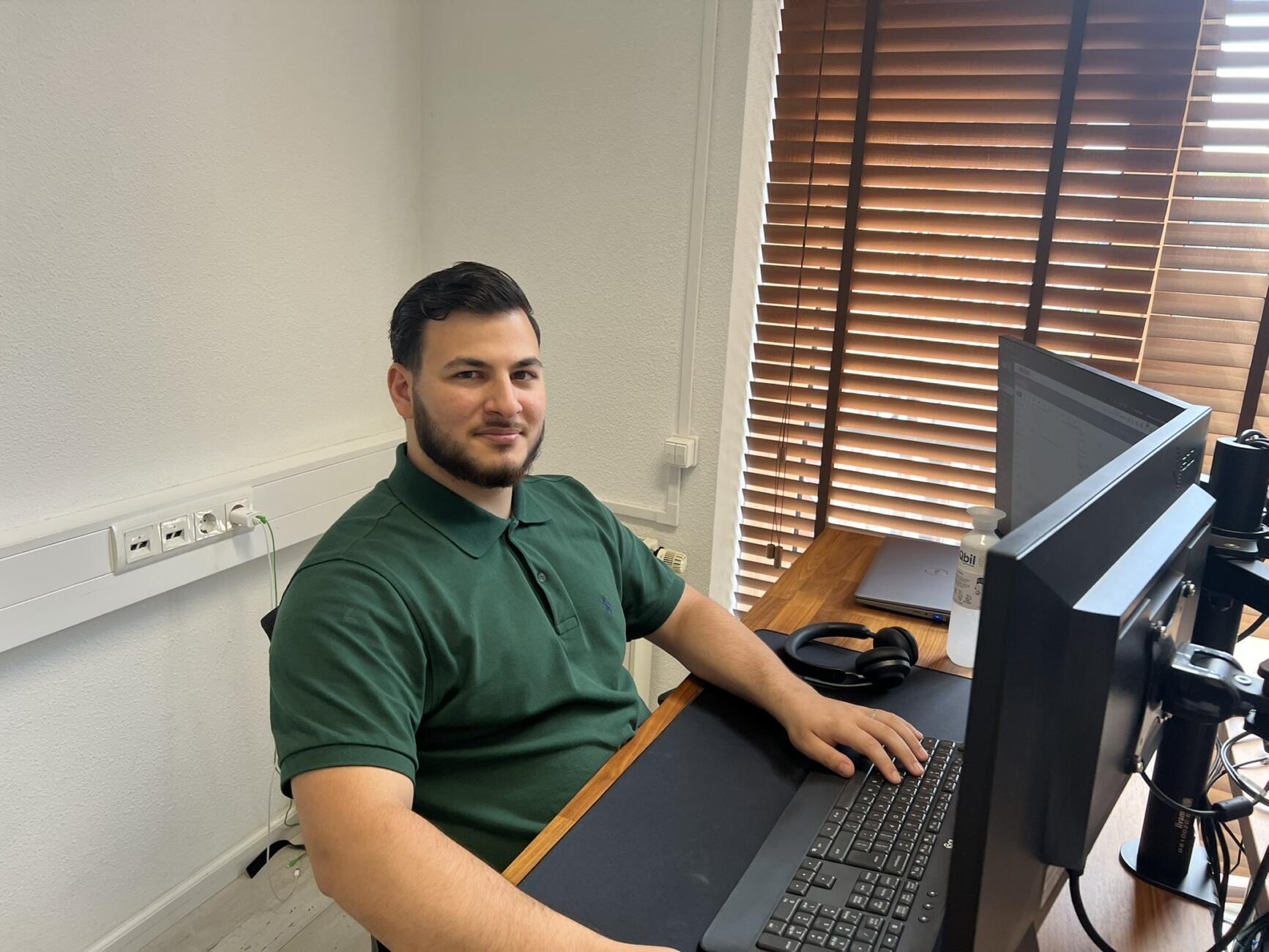
Behind the Scenes: Tarik
Tarik joined Qbil Software four years ago, straight out of school, at seventeen. He already knew the office a little – he used to stop by to visit his father – but actually sitting at a desk with his own login to the software environment was a different story altogether.
“The office felt familiar, but suddenly in a completely different shape. From the office you occasionally walk through, to your own workplace. It was a warm atmosphere, despite the small team. But it was also my first real experience of the business world, and straight into a fairly complex niche software environment. That was more than I had expected.”
Exploring and getting up to speed
His first week and the weeks after were mainly about exploring: what do our customers do, what does the market mean, how does the software actually work. “I put together summaries and a kind of presentations of the picture I had of what customers do. I’d present those, and then get extra context on what really matters to customers.” It took a while before things really clicked: how the software works, and why.
From support to sales
Tarik now combines support and sales, and that combination grew organically. “The sales side always appealed to me, even in previous jobs. I had no trouble talking to customers or prospects. From support, I started giving demos to prospects, and from there the shift toward sales developed – building on the product knowledge I’d picked up in support.”
What gives him the most energy isn’t support or sales as such, but helping with new questions. “Standard support – emails, tickets, recurring questions – is a bit flatter in terms of challenge. Sales gives me more of a kick: giving a demo, talking to a new customer, seeing what they’re running into. But in both cases, it’s really the thinking involved in new questions that energizes me.”
Support as a foundation
At Qbil, everyone starts in support, the place to get to know our software and our customers inside out. For Tarik, that foundation shows up mostly in the details. “The broad strokes, like contracts and orders, you pick up fairly quickly. But every customer has a different workflow. Especially in the first years of support, you discover those finer details: small features that turn out to be decisive for many customers.”
That knowledge comes back into play when he talks to prospects. “When someone comes with a problem, I often know: that one customer has a similar setup, this is how it works for them. For a smooth sales conversation, that detailed knowledge is really essential otherwise you keep having to go back to colleagues.”
Study and work reinforcing each other
Alongside his job, Tarik is studying Commercial Economics at university of applied sciences level, currently in the sales module. “You learn more and more sales techniques, like conversation skills, and do research into sales questions. Since it’s a part-time programme, I do the assignments for Qbil Software itself. For example, analysing recent prospect contacts or how best to structure follow-up.”
The programme also forces him to step out of the daily flow. “Normally you feel like you don’t have time to zoom out. But because of school, you have to make that time. And then you often land on an insight you wouldn’t otherwise have stopped to consider.”
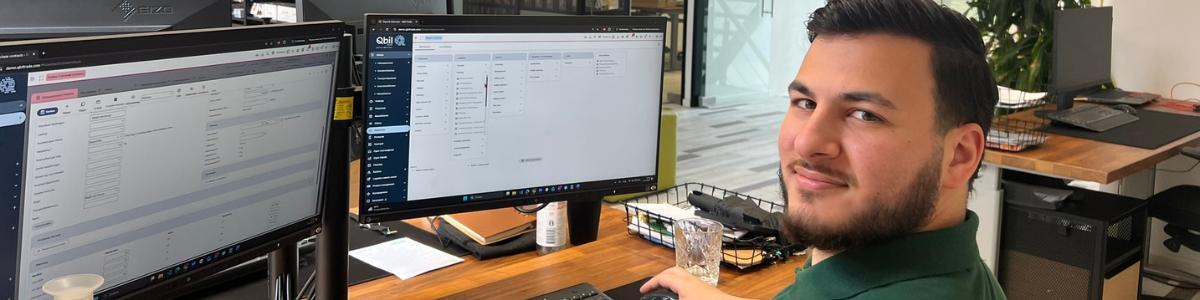
Working with customers worldwide
Qbil serves customers across a wide range of sectors and countries, and Tarik has learned to keep the distinctions between them sharp. “A dairy customer operates completely differently from a grain or coffee customer. In broad terms it’s the same, but you need to be able to recognise the differences.” There are nuances between countries too: German customers, for instance, communicate a bit more formally than Dutch ones. “If you take that into account a little, it’s usually appreciated quickly. In the end, it’s mostly a matter of different personalities, more than cultural differences.”
What customers teach him, and what surprises them
What Tarik has learned from customers is mainly adaptability. “Every company works just a little differently, with different requirements and needs. When someone comes with a question, the functionality usually already exists. It’s often a matter of digging to find the best way to fit it to what they need.”
What surprises new customers most is the traceability in the software. “The position list and other web reports spark surprise every time during a demo. Being able to drill all the way down to the origin of a position. That’s often the standout feature that gets the biggest reaction.”
Even the most unusual customer questions often turn out to be less about complexity than about simplicity. “Something I see regularly is that a situation looks very confusing and urgent at first: a customer calls in a panic that something isn’t right. But once you dig in, the explanation often turns out to be surprisingly simple: a human error somewhere in the process, rather than an issue with the software itself. I think that’s a recurring pattern: it looks big, but the cause is usually small.”
Ten years from now
His goal is clear: becoming Sales Director. “I still have some way to go, but I’m looking forward to it – every step of the way.” Looking further ahead, he also looks beyond his own role: growth in customers, growth in functionality, and customers who in turn grow in their trading. “A successful period, for new customers and existing ones alike.”
Curious what we can do for your trading business? Let’s talk.